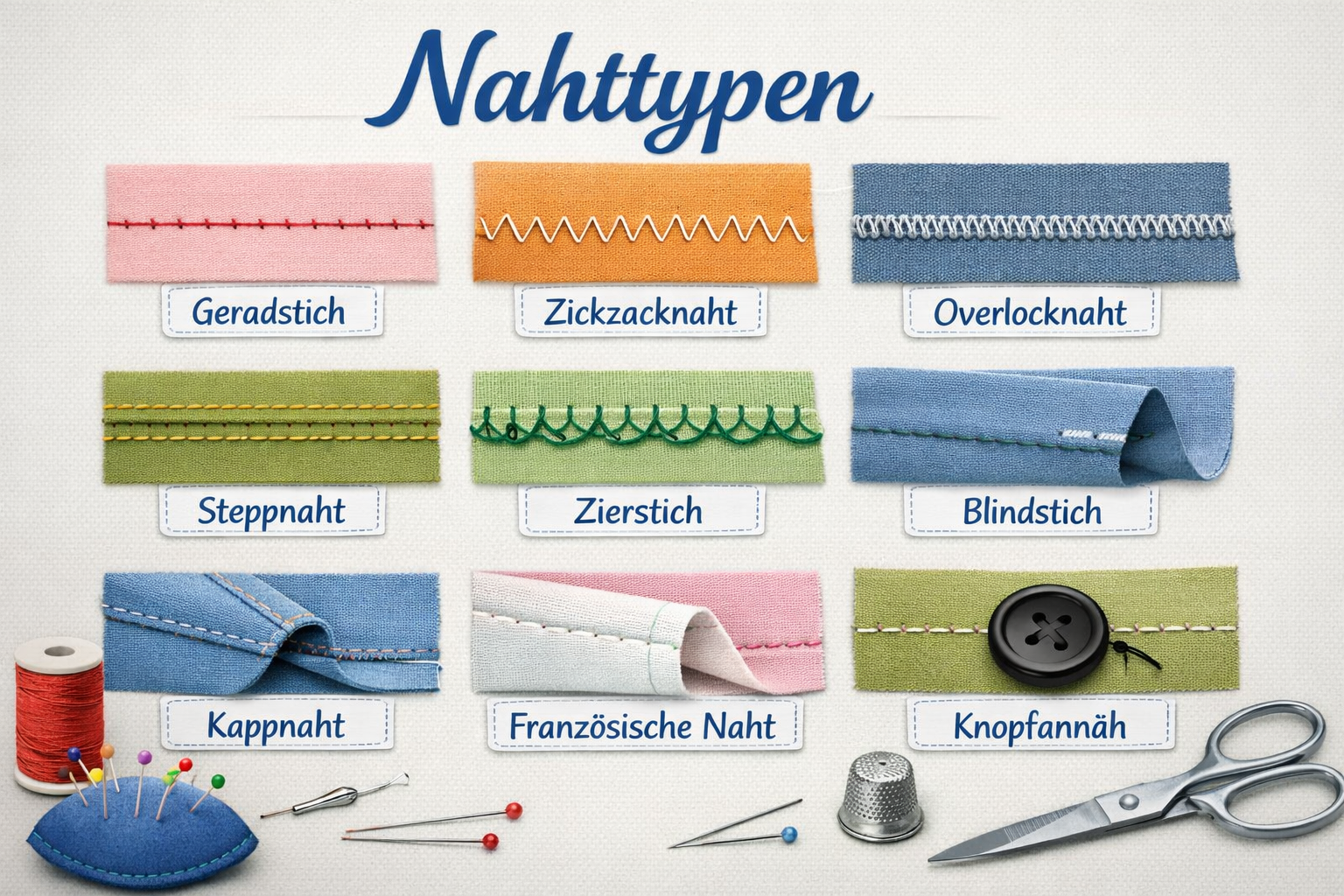
nahttypen
Have you ever looked closely at your favorite shirt and wondered how it stays together so perfectly? The secret lies in the world of nahttypen, which is the technical term for different types of seams. Understanding these seams is the first step toward becoming a master of fashion or textile craft.
Choosing the correct nahttypen is like picking the right foundation for a house. If the foundation is weak, the whole building might come crashing down eventually. In the same way, the seam holds the stress of the fabric and keeps the shape of the clothing intact. This guide will walk you through everything you need to know about these essential building blocks of fashion.
Expert Profile: Sarah Stitch
| Feature | Details |
| Full Name | Sarah “The Seamstress” Miller |
| Expertise | Industrial Textile Design & Home Sewing |
| Experience | 15+ Years in Garment Construction |
| Education | Bachelor of Fine Arts in Fashion Design |
| Specialty | Advanced Nahttypen and Fabric Durability |
Author Biography
| Section | Professional Background |
| Early Life | Started sewing at age six using a vintage foot-pedal machine. |
| Career Path | Worked for major USA apparel brands before starting a private consulting firm. |
| Mission | To help everyday creators understand complex textile terms like nahttypen. |
| Recognition | Featured in “Modern Maker” magazine for innovative seam techniques. |
Social Media Presence
| Platform | Handle/Link | Purpose |
| @SarahStitchOfficial | Daily sewing tips and seam close-ups. | |
| YouTube | CreativeSeamsChannel | Step-by-step tutorials on complex nahttypen. |
| SeamMasteryBoards | Visual guides for fabric and thread matching. | |
| Sarah-Miller-Textiles | Professional networking and industry insights. |
What Exactly Are Nahttypen and Why Do They Matter?
When we talk about nahttypen, we are looking at the specific ways two or more pieces of fabric are joined together. This is a very important part of the textile industry because it determines how a product functions. For example, a seam used for a heavy winter coat will be very different from the one used for a thin silk scarf.
Understanding the variety of nahttypen also helps you save money and time in the long run. When you know which seam to use, you do not have to redo your work because of mistakes. You will also learn that certain seams are better for specific machines, like a regular sewing machine or a specialized overlock machine.
The Importance of Choosing the Right Seam for Your Project
Selecting the best nahttypen is a decision that should happen before you even cut your fabric. Different materials react in unique ways to being pierced by a needle and held by thread. A stretchy jersey fabric needs a seam that can move with the body, while a stiff denim requires something much more rigid. If you choose a seam that does not stretch for your gym clothes, the threads will likely pop the first time you try to move.
In addition to strength, the visual appeal of your project depends heavily on your choice of nahttypen. Some seams are meant to be hidden on the inside of the garment so they do not distract from the design. Other seams are meant to be seen and can even act as a decorative element on the outside.
Common Nahttypen in Daily Sewing and Crafting
For most people who sew at home, there are a few basic nahttypen that appear in almost every project. The plain seam is the most common one because it is simple and very effective for most tasks. You just put two pieces of fabric together and sew a straight line down the edge. While it is simple, it is the foundation for almost everything else you will learn.
As you grow in your skills, you might start using more advanced nahttypen like the French seam. This is a beautiful way to hide raw edges inside a small envelope of fabric, making the inside of the garment look as clean as the outside. It is often used for delicate clothes like blouses or baby items. Another common type is the flat-felled seam, which you see on the side of your favorite pair of blue jeans.
Industrial Seam Standards You Should Know for Success
In the world of big factories and mass production, nahttypen are organized by international standards to keep everything consistent. These standards use numbers to identify specific stitches and seam types so that everyone in the world can understand the instructions. This is very helpful when a designer in one country needs a factory in another country to make a specific product.
Even if you only sew at home, learning about industrial nahttypen can give you great ideas for your own work. You can find ways to replicate these strong seams using the tools you have available. For instance, many modern home sewing machines now have settings that mimic industrial overlock or coverstitch seams. By studying how the professionals do it, you can elevate your hobby to a much higher level of quality.
Flat Seams and Their Unique Benefits for Activewear
Flat seams are a specific group of nahttypen where the edges of the fabric do not overlap. Instead, the edges sit right next to each other and are joined by a wide stitch that covers the gap. This is very important for activewear like leggings or cycling shorts. Because there is no extra fabric sticking out on the inside, the seam does not rub against the skin during exercise.
Another benefit of these flat nahttypen is that they are very sleek and modern in appearance. They create a smooth surface that looks very aerodynamic and professional. In the USA, the market for athletic clothing is huge, and these seams are a big reason why certain brands are so popular. They require special machines called flatlocks to achieve the perfect result, but the effort is worth it.
The Strength and Versatility of Overlock Nahttypen
If you have ever looked at the inside edge of a t-shirt, you have seen the work of overlock nahttypen. These seams are created by a machine called a serger or an overlocker. The machine trims the edge of the fabric and wraps threads around it all at the same time.
Many people find overlock nahttypen to be a bit intimidating at first because the machines use three, four, or even five cones of thread. However, once you learn how to use them, you will never want to go back to just a straight stitch for everything. They provide a level of professional finishing that is very hard to achieve in any other way.
Decorative vs. Functional Seam Types in Fashion Design
When planning a project, it is helpful to divide nahttypen into two main categories: those that do a job and those that look pretty. Functional seams are there to hold the pieces together and provide strength. They are the “muscles” of the garment that do all the heavy lifting.
Using decorative nahttypen is a fantastic way to express your personal style as a creator. You can use thick, colorful threads or unique stitch patterns to draw the eye to certain parts of a garment. This is very common in western-style shirts or high-end luxury bags.
Tools Needed for Creating Perfect Nahttypen Every Time
To create high-quality nahttypen, you need more than just a needle and some thread. Having the right tools makes the process much smoother and ensures your seams are straight and strong. A good set of fabric shears is essential for cutting clean edges that will not fray before you can sew them. You also need a variety of machine needles that match the weight of your fabric.
Other helpful tools for mastering nahttypen include seam gauges and marking pens. These help you stay accurate so that your seam allowance is the same all the way down the line. If your seams are wavy, the whole garment will look crooked when it is finished. Ironing is another secret weapon for perfect seams. Pressing your seams flat after you sew them makes a massive difference in how the final product looks.
Material Matters: Matching Your Fabric to the Best Seams
The relationship between your fabric and your chosen nahttypen is the most important part of sewing success. Lightweight fabrics like chiffon or organza need very fine seams that will not weigh them down or look bulky. If you use a heavy industrial seam on a light fabric, it will look messy and might even tear the material. On the flip side, heavy fabrics like canvas or leather need thick, reinforced seams that can handle the weight.
Another thing to consider when choosing nahttypen is the fiber content of the material. Natural fibers like cotton or wool behave differently than synthetic fibers like polyester or nylon. Some fabrics might shrink when washed, which can cause the seams to pucker if they were sewn too tightly.
Troubleshooting Common Problems with Different Nahttypen
Even the most experienced sewers run into trouble with their nahttypen from time to time. One of the most common issues is skipped stitches, where the machine fails to catch the thread. This usually happens because the needle is dull or the tension is set incorrectly. Another frustrating problem is “bird nesting,” which is when a huge clump of thread tangles up on the underside of the fabric.
If your nahttypen are puckering or gathering the fabric, you might need to adjust the pressure of the presser foot. This is especially common when sewing very thin or very stretchy materials. Sometimes, just changing the type of thread you are using can solve the problem.
The Future of Textile Joinery and Advanced Nahttypen
The world of fashion is always changing, and that includes the way we create nahttypen. New technology is allowing us to join fabrics in ways that do not even require thread. Ultrasonic welding and heat bonding are becoming more popular in high-end outdoor gear and medical textiles.
Even with all this new technology, the classic nahttypen we have used for centuries will likely always have a place. There is a certain beauty and soul in a well-sewn traditional seam that a machine weld just cannot match. As we move forward, we will see a mix of old-fashioned craftsmanship and futuristic technology. This will give designers even more tools to create amazing clothing and products.
Conclusion: Take Your Sewing to the Next Level
Mastering the various nahttypen is a journey that never truly ends because there is always something new to learn. From the simplest straight stitch to the most complex industrial bond, each seam has a story to tell and a specific job to do. By paying attention to these details, you are not just making clothes; you are building quality items that can stand the test of time.
We hope this guide has given you the confidence to experiment with different nahttypen in your next project. Do not be afraid to try a new technique or use a different machine to see what happens. The best way to learn is by doing and by seeing how different fabrics react to your choices.
Frequently Asked Questions (FAQs)
What is the most durable of all the nahttypen?
The flat-felled seam is widely considered one of the strongest nahttypen available. It involves folding the edges of the fabric into each other and sewing them down with two rows of stitching. This is why it is used for heavy-duty items like jeans and workwear. It can handle a lot of stress without tearing or coming apart.
Can I create professional nahttypen with a basic sewing machine?
Yes, you absolutely can! While some seams like the overlock are easier with a special machine, you can use a zigzag stitch or a French seam on a standard machine to get professional results. It just takes a little more time and attention to detail to make sure the edges are finished cleanly and the lines are straight.
Why are my nahttypen always puckering on thin fabric?
Puckering usually happens because the thread tension is too tight or the needle is too large for the delicate fabric. Try using a smaller “microtex” needle and loosening the tension dial on your machine. Also, make sure you are not pulling the fabric through the machine; let the feed dogs do the work for you.
How many types of nahttypen should a beginner know?
A beginner should start by mastering three main types: the plain seam, the zigzag seam, and the hem. Once you feel comfortable with those, you can move on to the French seam and the flat-felled seam. These five types will allow you to complete almost any basic sewing project with a high level of quality and success.
What thread is best for most common nahttypen?
For most projects, a high-quality all-purpose polyester thread is the best choice. It is strong, has a little bit of stretch, and does not shrink in the wash. If you are working with 100% natural fabrics like cotton, you might want to use cotton thread to match the fiber, but polyester is the most versatile for different seam types.
Do industrial nahttypen always require special machines?
Many industrial seams are designed for speed and use specific machines like a coverstitch or chainstitch machine. However, the logic behind these nahttypen can often be applied to home sewing. You can find ways to reinforce your seams or finish your edges using the tools you have to mimic the strength and look of industrial standards.
About the Author